This article is part of our guide: What Is IGP? Tracking, Obedience and Protection Explained.
Protection Work in IGP: More Than Barking, the Helper and the Bite
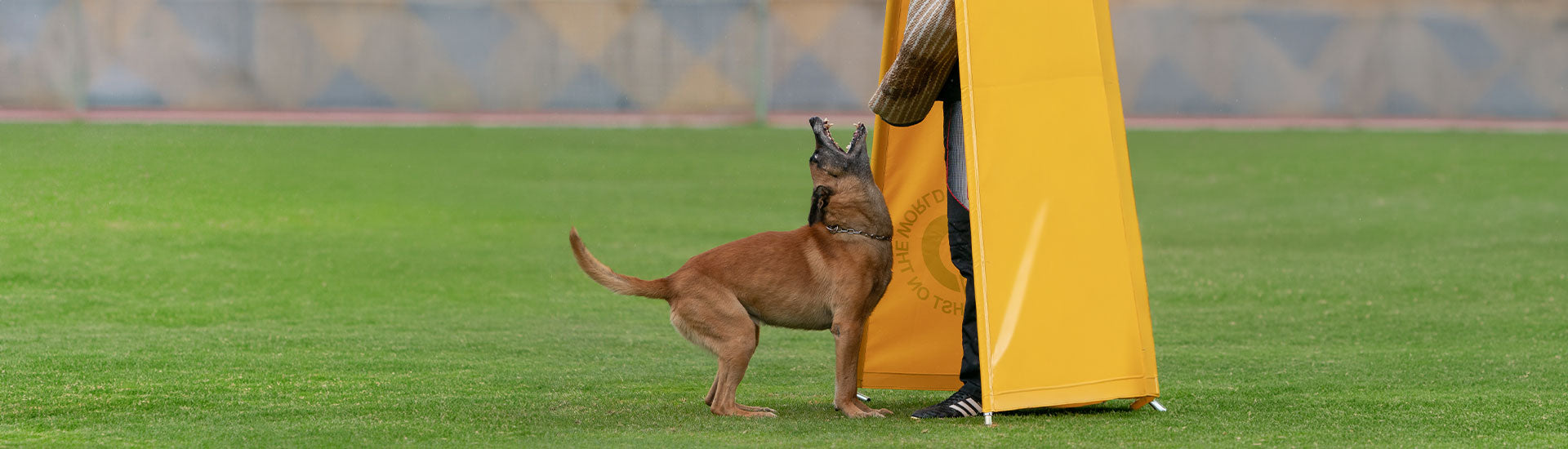
Protection work is phase C in IGP and probably the part of the sport that gets the most attention. From the outside you see speed, barking, the helper, the blinds and the bite. That is exactly why protection work is so often misunderstood.
Good protection work is not uncontrolled action. It is education.
The dog should search for the helper and then hold and bark. In the grip work it should be powerful and clear, take pressure, out on command and stay controllable afterwards. That is considerably more demanding than it looks from the outside.
Protection work is not about simply making the dog hot. It is about channelling energy into a clear task. The dog should work intensively without losing its head. It should show drive but stay responsive. It should want to go forward, but within a clean training system.
Good protection work does not begin with the bite. It begins with structure, control and clean training.
What Does Protection Work in IGP Involve?
Protection work consists of several building blocks that are later assembled into a trial routine. Among them are searching the blinds, hold and bark, prevention of escape, defence against attacks, the out, guarding and handler control between the individual parts of the exercise.
Each of these building blocks places different demands on the dog.
In searching the blinds the dog has to search actively and detach from the handler. In hold and bark it should bind the helper clearly without gripping on its own initiative. In the grip work it needs strength, confidence and resilience. The out and guarding show whether the dog stays controllable despite high drive.
It is exactly these switches that make protection work so demanding. The dog does not only have to be able to go forward. It also has to be able to switch back.
Why Searching the Blinds Is Often Underestimated
Many newcomers look at the grip first. Yet the quality of the work often begins much earlier, in searching the blinds.
The dog should not run the blinds simply because it has learned a pattern. It should understand that it has to search actively. You recognise good work in the blinds by a dog that runs with purpose, detaches cleanly from the handler, takes the blinds seriously and moves clearly into hold and bark at the helper.
Typical problems arise when searching the blinds is trained too schematically. The dog then only runs familiar routes, cuts blinds, loses intensity or becomes uncertain as soon as the picture changes.
That is why variation matters in training. This is exactly where a mobile blind becomes useful. The IQ Pop-Up Blind is a foldable protection blind for IGP and mobile blind-search training. It unfolds quickly, is easy to transport and can also be used away from the fixed training field.
This lets you vary running routes, distances and training locations instead of always setting the dog up on the same picture. For clean work in the blinds that is a big difference: the dog should not simply learn one field by heart, but understand the task in changed situations as well. Which construction suits that, and where classic blinds have the advantage, is covered in IGP protection blinds compared.
In Protection Work, Control Is Not the Opposite of Drive
A common misconception is that a dog is either full of drive or controllable. Good protection work needs both.
A dog that is only controlled but shows no energy will not convince in phase C. A dog that only shows energy but does not stay responsive is equally problematic. The goal is a dog that works intensively and still remains controllable.
This shows most clearly in the transitions: before the engagement, after the grip, at the out, during guarding and when sending the dog in again. These moments are often less spectacular than the bite, but they decide the quality of the training.
If you do not train these transitions, you usually run into problems later. The dog outs poorly, guards untidily, does not come down again after the pressure or becomes unclear between the parts of the exercise.
Protection work is therefore not just grip work. It is also self-control, obedience and clean communication under high arousal.
Why the Harness Has a Real Function in Protection Work
In protection work there are situations in which the dog works forward with full energy: during the barking, in line work, on the back-tie or when driving towards the helper. In moments like these a harness is not simply an accessory. It affects how pull acts on the body, whether the dog can breathe freely, how stable it stays and how well it can develop its power forwards.
The IQ Performance Pro Cobra is a tactical protection harness for protection work, IGP and high-load training situations. It is designed for free breathing under load, controlled force transfer, reduced pressure points, freedom of movement and secure line handling.
The pulling force is directed between the front legs towards the sternum, so that the throat and windpipe stay clear. At the same time the construction supports stable handling under load and reduces the risk of the harness twisting or flipping awkwardly during dynamic line work.
That is where the harness belongs technically in protection work: not as a visual accessory, but as a working harness for situations in which pull, movement, control and load come together.
The Bite Is Important, But It Is Not the Beginning
Grip work is of course part of protection work. But if you look only at the bite, you see too little.
Before the grip, the dog has to understand the situation. It has to know when to search, when to hold and bark, when to grip and when to out. It has to learn to take pressure without becoming untidy. It has to come back into control after high arousal.
That is why protection work should not be built on strong pictures alone. A spectacular bite is of little help if the dog does not bark cleanly, does not out reliably or is no longer controllable after the action.
The book Gemeinsam erfolgreich zum meisterhaften Schutzdienst walks step by step through the development of modern protection work, from the young dog through to trial readiness. It suits anyone who wants to see protection work as more than a set of individual exercises and to understand the training logic behind it.
How Do You Recognise Good Protection Work?
Good protection work is not simply loud, fast or spectacular. It is clear.
The dog works actively and powerfully but stays steerable. It takes pressure without losing its head. It shows energy but can switch back into obedience and control.
That is the difference between pure action and education.
Beginners in particular look too much at the bite. Experienced trainers look much earlier: How does the dog get into the work? How does it stay in its head? How does it respond to guidance? How does it resolve conflict? How well does it come back down?
That is where quality is made.
Five Common Beginner Mistakes in IGP Protection Work
1. The Bite Becomes the Focus Too Early
The grip matters, but without searching the blinds, control and clear transitions the training stays unstable.
2. Searching the Blinds Is Seen Only as a Running Exercise
The dog should not simply run the blinds, but search actively and understand the task.
3. Control Is Only Asked For Later
The out, guarding and handler control have to be part of the plan from the beginning.
4. Transitions Are Underestimated
Sending the dog in, holding it, taking it out and leading it again are central training moments.
5. Equipment Is Treated Like Everyday Kit
Protection work creates different pull and load situations. That applies in particular to the harness, line handling and securing the dog.
Final Thoughts: Protection Work Is Education Under High Energy
Protection work in IGP is not simply action at the helper. It is a demanding training discipline in which drive, control, resilience, grip work, searching the blinds and handler control come together.
A good protection dog wants to work but stays responsive. It shows energy without losing its head. It grips powerfully but can let go again. It searches actively, barks clearly and lets itself be guided by the handler.
That is why good protection work does not begin with the bite. It begins with structure, control and clean training.
The right training aids can support exactly where they technically belong: the IQ Pop-Up Blind brings more variation into searching the blinds. The IQ Performance Pro Cobra is designed as a working harness for protection situations involving pull, load and movement. And the book Gemeinsam erfolgreich zum meisterhaften Schutzdienst gives a structured foundation to anyone who wants not just to train protection work, but to really understand it.
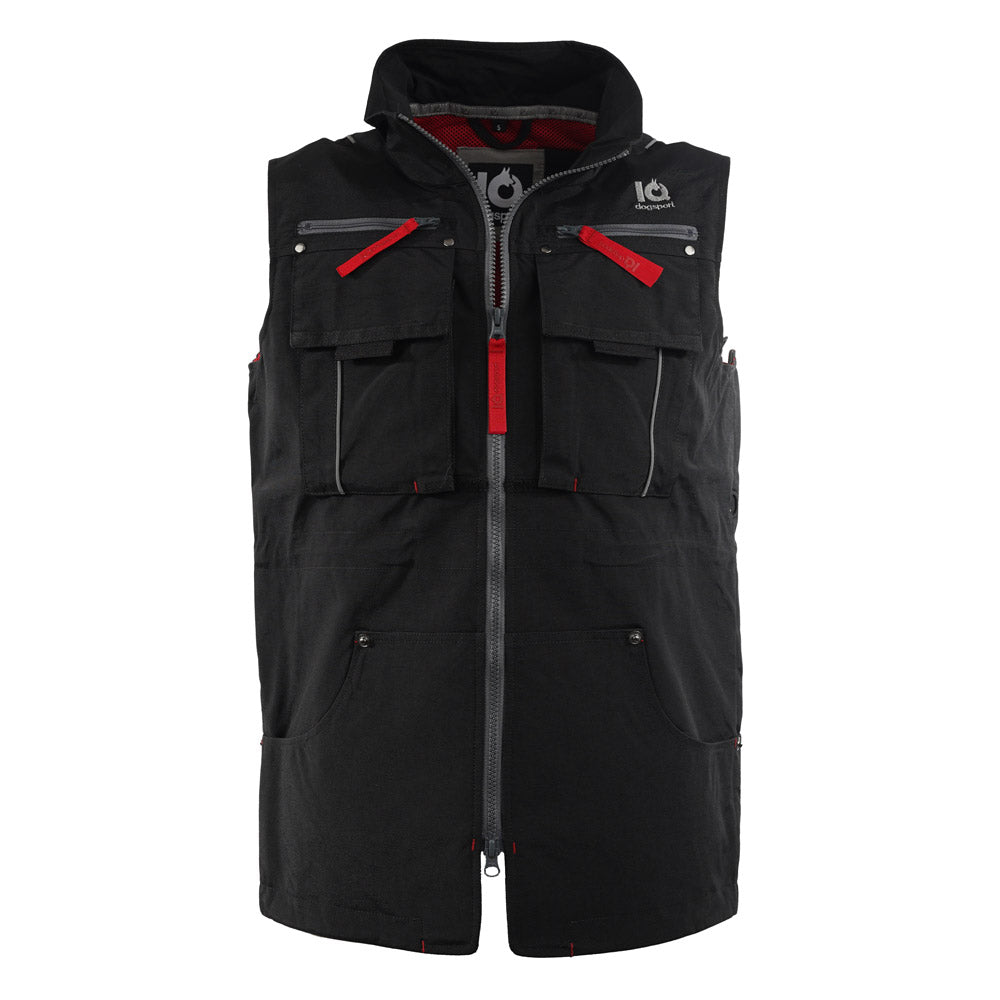
Related: Dog sport vests · Equipment for service dog handlers
More IGP basics
→ Building IGP tracking
→ Building IGP obedience
→ Working dog operations explained
About the manufacturer
IQ Dogsport is a German manufacturer of dog sport equipment, based in Pfaffenhofen, Germany. The range covers dog sport vests, multi-function and training jackets, reward systems and IGP training equipment – in service with K9 handlers in the police, customs service, prison service and armed forces. More about IQ Dogsport